
Reverse Osmosis vs Distilled Water
Reverse osmosis vs distilled water: both remove 99%+ of contaminants. RO costs ~$0.06/gallon. Distillation costs ~$0.28/gallon. Lab data shows when each technology wins.
Waterdrop G3P800 Tankless RO
$649

APEC Water ROES-50
$235

Quick Verdict
RO wins for home drinking water — faster, dramatically cheaper per gallon, and equally effective on every health contaminant that matters. Distillation is the better choice only for laboratory or medical applications that require no membrane maintenance.
RO vs Distilled: Same Purity, Very Different Economics
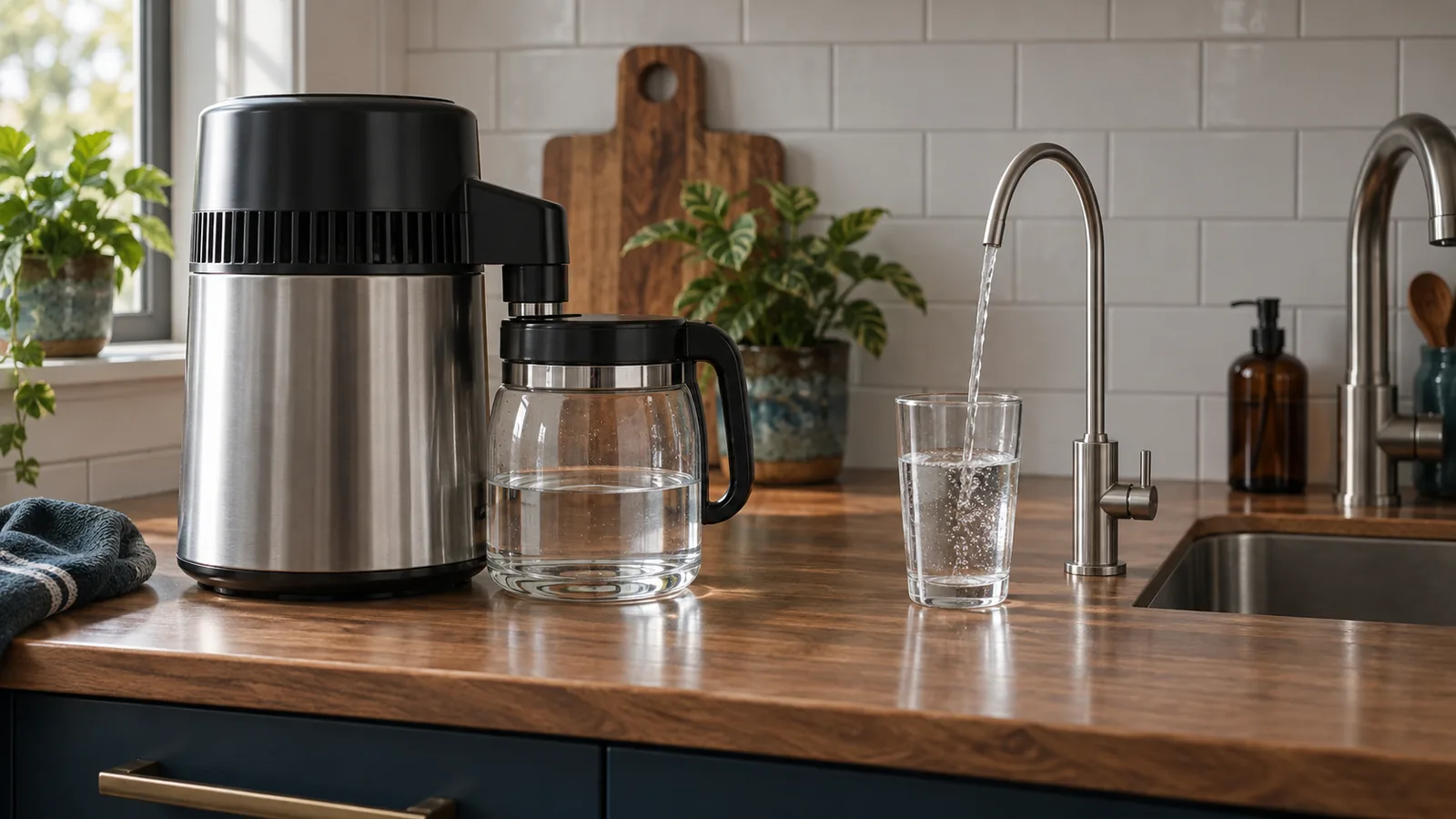
Reverse osmosis and distillation both produce water with 95–99%+ removal of dissolved contaminants — the end result in a glass is remarkably similar. The difference is in how you get there. RO uses a pressurized membrane and produces water continuously at $0.05–$0.08/gallon. Distillation boils water and collects purified steam at $0.25–$0.35/ gallon in electricity costs, producing about 1 gallon every 3–4 hours.
For home use: RO wins decisively on economics. A 75 GPD (gallons per day) RO system provides continuous filtered water for a family of 4 at a fraction of distillation's operating cost. Distillation has legitimate specialty applications — CPAP humidifiers, laboratory equipment, and situations requiring VOC removal that RO cannot achieve. For drinking water: the choice is RO.
Technical Comparison: Where Each Technology Wins
| Factor | Reverse Osmosis | Distillation | Winner |
|---|---|---|---|
| TDS removal | 83–90% | 98–99% | Distillation |
| Lead removal | 99%+ | 99%+ | Tie |
| PFAS removal | 95%+ | >99% | Tie (both effective) |
| Nitrate removal | 88–92% | 99%+ | Distillation |
| VOC removal | Partial (50–80%) | 95%+ (most VOCs) | Distillation |
| Production speed | 75–400 GPD continuous | ~1 gallon/4 hrs | RO |
| Operating cost | $0.05–$0.08/gallon | $0.25–$0.35/gallon | RO |
| System cost | $150–$400 installed | $150–$500 countertop | Similar |
| Maintenance | Annual filter changes | Clean after every batch | RO |
| NSF certification | NSF 58 (full system) | Limited options | RO |
| Best for | Home drinking water | Medical equipment, lab use | Depends on use |
The 5-Year Cost of Each Approach
Under-Sink RO (iSpring RCC7AK)
Countertop RO (AquaTru)
Countertop Distiller (Mophorn)
Bottom Line
Total Cost of Ownership
| Period | Waterdrop G3P800 Tankless RO | APEC Water ROES-50 |
|---|---|---|
| 1 year | $769 | $300 |
| 3 years | $1,009 | $430 |
| 5 years | $1,249 | $560 |
| 10 years | $1,849 | $885 |